

Home > Blog posts > Everything You Need to Know About Flat Roof Ventilation
Everything You Need to Know About Flat Roof Ventilation
Flat roof ventilation remains essential to prevent moisture, condensation and overheating, on top of extending your roof’s lifespan and maintaining stable temperatures. Proper airflow involves a constant exchange between indoor and outdoor air. Regular maintenance can also include a regular review of your flat roof’s ventilation system.
Why is Ventilation Essential on a Flat Roof?
Preventing Moisture and Condensation
When optimized, flat roof ventilation prevents moisture buildup and reduces condensation. An adequate ventilation system ensures comfort, your roof’s durability, and keeps your building in good condition.
Avoiding Overheating and Extending Your Roof’s Lifespan
Proper insulation and ventilation on a flat roof prevent overheating and extend the roof’s lifespan. With optimal ventilation, your flat roof is better preserved, thus avoiding excessive temperature spikes. Excessive heat damages the roof structure and reduces its durability.
Maintaining a Stable Temperature Inside the Building
An efficient flat roof ventilation system regulates indoor temperature by expelling hot air. Such a system helps reduce the load on the air-conditioning system and provides a comfortable living space.

How Does Flat Roof Ventilation Work?
The Principles of Proper Airflow
Although ventilation can be achieved in various ways, it is fundamentally based on an air circulation principle, where a constant flow of fresh air enters the building, ensuring optimal results. Then, air circulates throughout the structure before exiting via the roof vents. This principle guarantees optimal and continuous airflow, preserving the structure and the materials used.
Different Types of Ventilation (Passive, Mechanical)
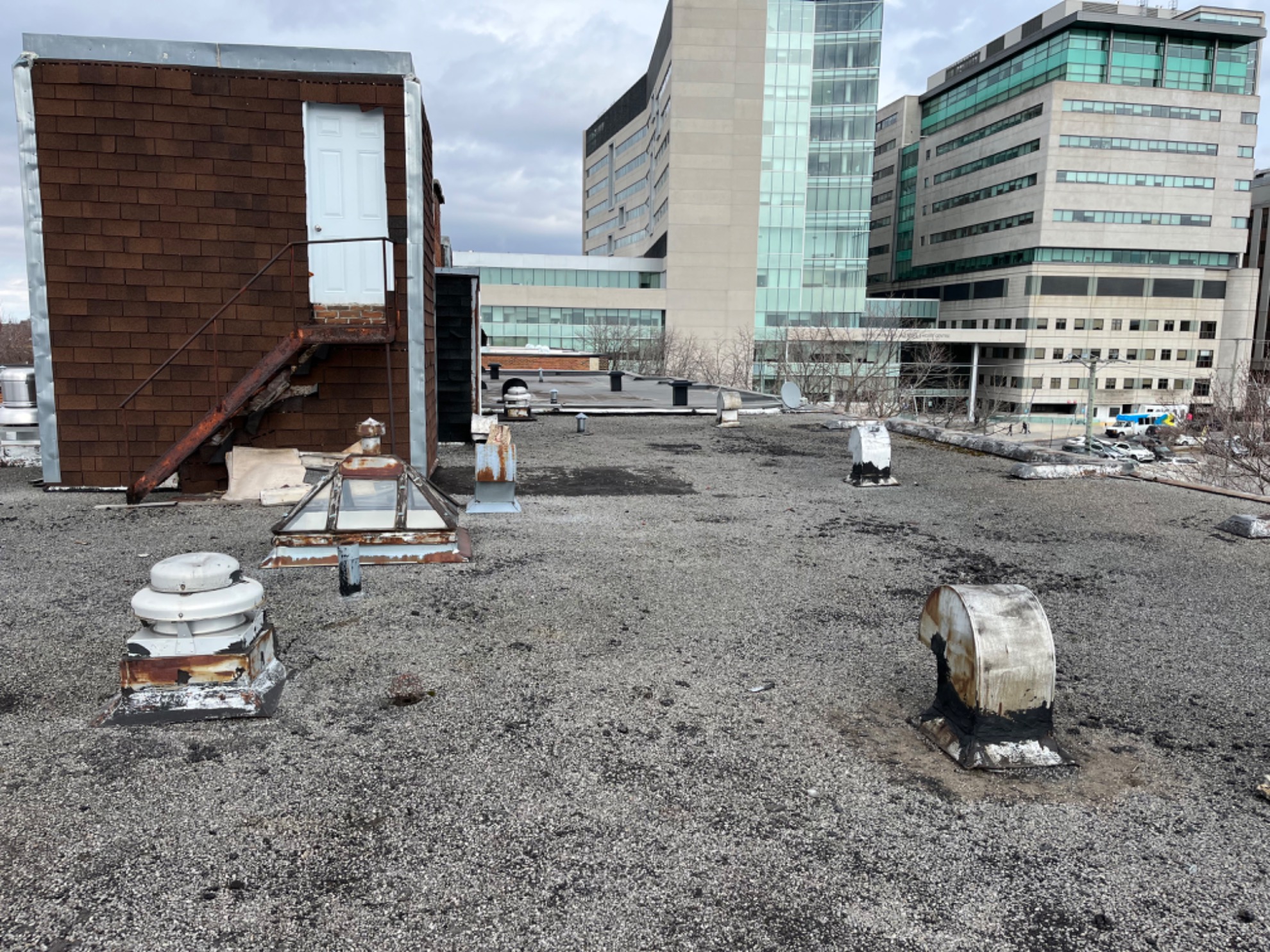
Some major components used for efficient ventilation include swan neck vents and Maximum fans. They allow fresh air to enter while expelling hot air, regulating the temperature and maintaining effective standards. This system is known as passive ventilation.
The second type of ventilation consists of mechanical components in motion. In other words, to circulate air, a mechanized fan is employed.
The Importance of Design Based on the Roof Structure
Flat roof experts will guide you in choosing the appropriate type of ventilation. Depending on the roof structure, they will suggest which system best suits your needs, whether it involves mechanical fans, swan neck vents, or even Maximum fans, for example.
The Consequences of Poor Ventilation
Moisture Buildup and Mold
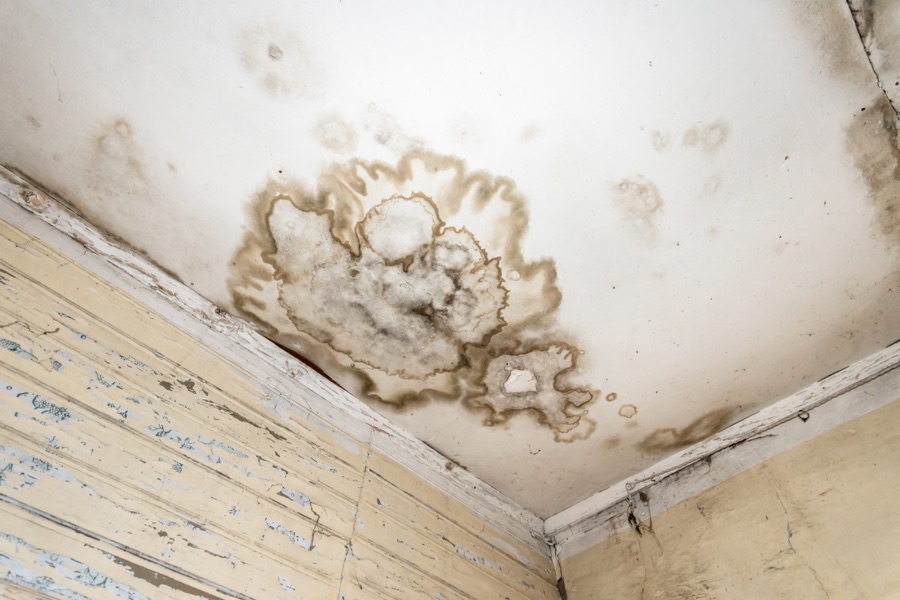
It is important to understand that poor ventilation can exacerbate moisture issues. Additionally, you may notice the appearance of mold or moss, which is a sign of trouble.
Degradation of the Membrane and Insulation
A poorly ventilated flat roof will also contribute to the degradation of the membrane and insulation. Indeed, the quality of the materials will be compromised by inadequate ventilation.
Higher Energy Bills
Finally, it is not uncommon to see an increase in your energy bills due to inadequate roof ventilation. You may experience temperature fluctuations that lead to significant costs.

Best Practices for Effective Ventilation
Check the Ventilation Openings Regularly
One of the best ways to ensure effective ventilation and control roof moisture is to routinely inspect the ventilation openings and verify they are functioning properly.
Keep the Ducts Clear
Another method to improve ventilation is to keep the roof ducts clear. Securing your roof before the winter season is an excellent strategy to enhance ventilation performance, ensuring every detail is thoroughly examined.
Have Your Roof’s Ventilation System Inspected During Roof Maintenance by our Experts
Finally, take advantage of an expert team at Clinique de la Toiture FCA to inspect your flat roof ventilation system during biannual maintenance. Benefit from specialized recommendations to upgrade your systems, as well as expert advice in the installation of a skylight on a flat roof. Book your appointment today!
FAQ
It regulates indoor temperature, promotes airflow, and eliminates moisture and condensation.
Several factors indicate good ventilation: stable temperature, absence of ice, and clear ventilation ducts.
You may notice damp areas, condensation, mold, as well as significant temperature discrepancies in the building’s different rooms.
Yes, to extend its lifespan, eliminate moisture, and release heat. This helps prevent condensation and the formation of mold.
The first relies on swan neck vents or natural vents, while the second employs mechanized fans. The former leverages natural forces to renew the air, whereas the latter forces air circulation with a mechanized fan.
Don't wait any longer: ask us for a quote!
Get an estimate in just 2 quick steps!
*Please allow a minimum of 24 hours for your request to be processed. Thank you for your understanding!
Témoignages et avis de nos clients
Trustindex vérifie que la source originale de l'avis est Google. Nous sommes très satisfaits des travaux qui ont été exécutés par l'équipe de la Clinique de toiture FCA. Nous avons eu des suivis rapprochés et la date des travaux fût respectée. Merci à toute l'équipe.Trustindex vérifie que la source originale de l'avis est Google. Nice job - professional team Happy to work with them Highly recommendedTrustindex vérifie que la source originale de l'avis est Google. Nous avons eu un excellent service, de l’inspection à l’exécution des travaux. Nous avons eu des photos avant et après les travaux. Je recommande cette entreprise!Trustindex vérifie que la source originale de l'avis est Google. Très satisfaite de l'efficacité de la compagnie, j'ai reçu toutes les réponses à mes questions. Merci à toute l'équipe.Trustindex vérifie que la source originale de l'avis est Google. Travail de professionnels. Entreprise à recommander.Trustindex vérifie que la source originale de l'avis est Google. L'équipe de Clinique de la Toiture FCA a fait un travail exceptionnel sur ma toiture. Le chantier a été nettoyé rapidement et efficacement, et le résultat final est impeccable. Je suis très satisfaite de la qualité du travail et du professionnalisme de l'équipe. Je recommande vivement cette entreprise à tous ceux qui ont besoin de travaux de toiture.Trustindex vérifie que la source originale de l'avis est Google. Excellent service: professionnel, courtois et efficace. Bon rapport prix et qualité du produite. Aucune hésitation à recommandé la Clinique de la Toiture.Trustindex vérifie que la source originale de l'avis est Google. La réfection de la toiture de l'immeuble a été faite en 2019 et nous sommes très satisfait d'avoir choisi la Clinique de la Toiture FCA. Des produits de haute qualité et un service après vente hors pair. On a eu une urgence dernièrement d'une fissure de la membrane à cause d'une terrasse en bois mal posée. J'ai appelé en urgence la Clinique de la Toiture FCA pour éviter des dégâts d'eau importants. L'estimateur Yohan Fournier, courtois et respectueux, a su contenir mon impatience et a fait une réparation temporaire en colmatant cette fissure. Quelques jours plus tard, l'équipe de Yohan est venue tout réparer à notre satisfaction. Leur approche au service du client est exemplaire. Je recommande leurs services et savoir-faire sans hésiter.Trustindex vérifie que la source originale de l'avis est Google. Nous sommes entièrement satisfaits de vos services, de la première rencontre avec votre estimateur qui nous a mis en confiance, à la réalisation des travaux qui a répondu à toutes nos attentes. Merci pour une toiture bien faite et performante. On sent déjà un meilleur confort dans les appartements situés au 2e étage. Nous vous recommandons à tous.
Need help?
Leave us your email address and we will contact you as soon as possible to assess your needs!
Put an end to your water infiltration your clogged drains your roof problems
Leave us your email address and we will contact you as soon as possible to assess your needs!